


Tuner Z - Track Days
4.173.00 Reviews
App Specs
- Version
- 0.9.6.4.9
- Updated On
- License
- Free
- Downloads
- 50,000+
- Developer
- Notraction Games
- Categories
- Racing
- Platform
- Android
Screenshots
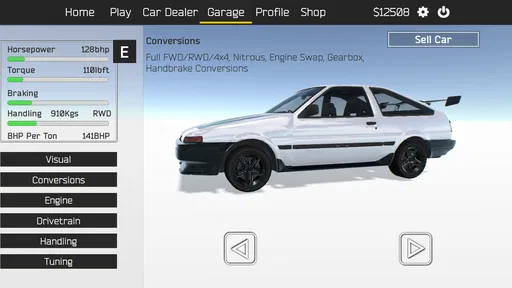
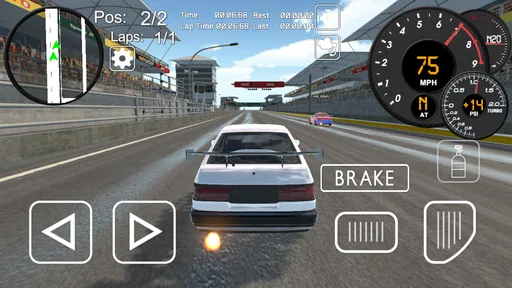
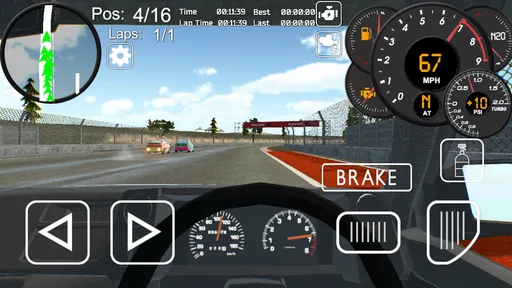
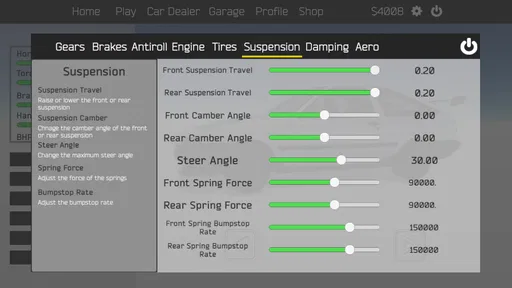
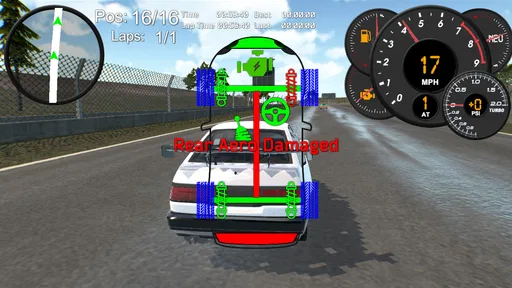
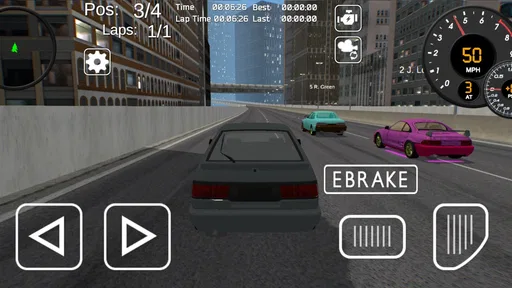
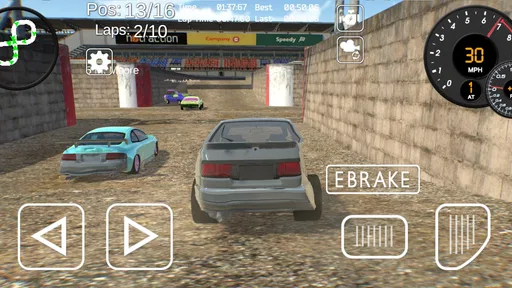
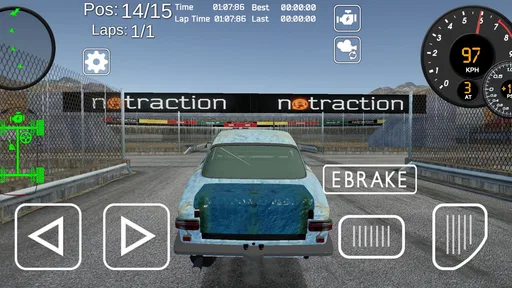
 Analysis by AppCompare
When I want a racing game that spends as much time on the car as it does on the road, I look for something more involved than a simple accelerate-and-turn experience. Tuner Z - Track Days, made by Notraction Games, aims at that particular audience. It is a free racing game for Android, rated for Everyone, built around the idea of tuning a car and then testing the result on track. The appeal is less about a huge collection of licensed content and more about the relationship between setup and driving.
After spending time with it, I see a game that can be surprisingly absorbing for players who enjoy adjusting a vehicle, trying a run, noticing where it feels wrong, and returning to the garage with a plan. It is not the best choice for someone who wants an instantly polished arcade racer with constant rewards and effortless progress. Its strengths come from the tuning focus, while its weaker moments appear when the player expects the immediacy and visual spectacle of larger racing games.
The game has reached over fifty thousand installs and holds an average rating of around 4.1 from more than six hundred ratings, which gives a useful impression of a small but interested community. It remains free to start, with optional purchases ranging from $1.49 to $10.99 per item. That makes the initial decision easy: download it, test the handling, and decide whether its workshop-style approach suits you before spending anything.
How the driving feels before and after tuning
The first thing I noticed is that the racing experience depends heavily on what I do before entering a run. In many mobile racers, the garage is mostly a place to select a cosmetic item or press an upgrade button. Here, the tuning identity is much more important. The satisfaction comes from treating the car as something to understand rather than simply something to replace.
That changes the expected pace. Tuner Z - Track Days is not necessarily about immediate high-speed excitement from the first touch. The perceived speed grows when the car begins to respond in a way that matches the driver’s intention. A poorly understood setup can make a run feel flat or awkward, while a more suitable adjustment can make the same kind of driving feel sharper. I found that contrast more interesting than a constant stream of artificial speed boosts.
The important trade-off is control versus instant gratification. Players who enjoy learning how a car reacts will find more to do here than in a basic arcade racer. Players who only want short races with obvious wins may feel that the preparation slows things down. The game asks for attention, even when a session itself is brief.
That makes it particularly suitable for a player who likes experimenting. I could approach a run with one goal, such as making the car feel easier to manage, and then judge the result by how confidently I could carry the car through the next section. This is a more practical way to play than changing everything at once. When several settings are altered together, it becomes difficult to know which decision helped and which one created a new problem.
Worth Reading Before You Choose

EA SPORTS FC Mobile 26 Is a Bigger Football Game, but It Takes Time

Flipboard Shows What News Apps Must Do Beyond the Feed

Switching to Android Auto Means Rethinking Your Driving Routine

Google Calendar Makes a Crowded Week Easier to Manage

Ludo King Makes the Most of the Minutes Between Plans

Baby Panda World Brings Quick Play to Modern Phones, but Its Game Library Feels Busy
Why small adjustments matter more than dramatic changes
A useful habit is to treat each tuning session like a test rather than a shopping trip. I prefer making one meaningful change, driving again, and paying attention to the same part of the track. That workflow reveals whether the car has genuinely improved or simply feels different. It also prevents the common mistake of building a setup that looks impressive in the garage but is harder to drive consistently.
This is one of the game’s less obvious strengths. The tuning system gives the player a reason to develop a repeatable method. I do not need to chase a perfect setup immediately. Instead, I can decide whether I want a forgiving car for everyday runs or a more demanding configuration that rewards precision. That choice gives the game a personal character that is missing from many quick mobile racers.
There is also a practical reason to avoid over-tuning. A car that feels lively can be exciting for a few corners but tiring over a longer session. If the setup demands constant correction, I may finish a run feeling that the car was fast but not useful. For ordinary play, I would rather give up a little theoretical speed in exchange for a vehicle I can place reliably.
One realistic use case is a short evening session after work or school. I might have only enough time for a few attempts, so I would not spend the whole session rebuilding the car. Instead, I would identify one recurring issue, make a focused adjustment, and use the next run to see whether the problem is still there. That makes the game feel productive even when I am not chasing a major milestone.
What happens during heavier play
The more demanding moments arrive when tuning and racing are combined repeatedly. A single run is one thing; moving between the garage, adjustments, and several attempts creates a heavier workload for both the player and the device. This is where expectations should remain realistic. Tuner Z - Track Days is a focused game from a smaller developer, not a giant production designed around the broadest possible range of modern phones.
On a capable device, I would expect the experience to feel most comfortable when the phone is not already busy with other demanding tasks. Closing unnecessary background apps is sensible before a longer session, especially on an older handset. That is not unique to this game, but it matters more when a player wants stable control rather than merely getting through a race.
Resource demands are also connected to session length. A quick test run may feel perfectly manageable, while a long tuning session can expose heat, battery use, or general slowdown on a constrained phone. I would not judge the game only by its first few minutes. Anyone planning to play for extended periods should test it on their own device and observe whether control remains consistent after repeated runs.
For me, stability is more valuable than a dramatic presentation. A racing game can look attractive, but if input feels inconsistent or the frame delivery becomes uneven at the wrong moment, the whole setup exercise loses meaning. The tuning decisions are worthwhile only when I can evaluate them under reasonably repeatable driving conditions.
That is why I recommend a simple personal check: use the same car setup for several attempts, then compare how predictable the steering and acceleration feel. If the game remains comfortable during that repeated test, it is probably a good fit for the device and the player. If the phone becomes uncomfortable or the controls feel less dependable, shorter sessions are the safer approach.
Stability, recovery, and the cost of a bad run
Racing games are unforgiving when a mistake forces a long restart, and tuning games add another layer because the player may also question the setup. A failed attempt can mean the driving was poor, the adjustment was unsuitable, or both. I found it helpful to separate those possibilities instead of immediately changing the car after every disappointing run.
Recovery is easier when I keep notes mentally: did the car feel difficult from the first corner, or did the problem appear only when I pushed harder? If the issue is present everywhere, the setup may be too demanding. If it appears only at a particular section, the better answer may be a more careful line or a different approach to that part of the track. This mindset saves resources and reduces random changes.
The game is therefore more reliable as a learning experience than as a carefree distraction. I can recover from a bad session by returning to a known setup and making one controlled change. That process gives me a stable reference point. Without one, the garage can become confusing because every adjustment affects my understanding of what the car is doing.
Players should also consider how they react to repetition. The game’s appeal depends on being willing to try again with a slightly better plan. If repeating a run feels tedious, the tuning depth may not compensate for that frustration. If repetition feels like investigation, the same structure becomes a reason to keep playing.
Notraction Games has kept the game’s identity clear: this is a racing title for people who want to engage with the car, not just the finish line. The current version is 0.9.6.4.9, and the game was released on April 6, 2020. Those details place it in a different context from brand-new racing releases that arrive with a large promotional push and a heavily polished presentation. Here, the more important question is whether the core driving-and-tuning loop works for you.
Device limits and who should be cautious
The minimum operating-system requirement is Android 9, so anyone using an older Android version will need to check compatibility before getting invested. For supported devices, the more useful question is not simply whether the game installs, but whether the phone can maintain a comfortable session. Racing needs responsive input, and a device that struggles under load can make a tuning-focused game feel unfairly difficult.
I would be especially cautious with older or entry-level hardware that already slows down during 3D games. Keep the first session short, avoid testing while the phone is charging if heat is a concern, and see whether the controls remain dependable after several attempts. These are practical checks rather than promises about performance, because the result will vary considerably between devices.
Storage and battery habits also matter in everyday use. I would leave enough free space for the game and avoid starting a long session when the battery is nearly empty. A racing game is not a good place to discover that the phone is about to enter a power-saving state. If a player mostly uses an older phone, shorter runs with breaks may provide a better experience than trying to play for an uninterrupted hour.
People using iPhones should also pay attention to platform availability before planning around the game, since the listed minimum operating-system requirement is expressed for Android. The safest approach is to check the relevant store on the device in hand rather than assuming that every feature or version behaves identically across platforms.
The Everyone content rating makes the game approachable for a broad audience, but that does not mean every player will enjoy it equally. Younger or casual players may appreciate the racing theme, while the tuning emphasis could require patience and explanation. Adults looking for a technically minded hobby game may find that same quality more attractive than a child looking for instant action.
Free entry, optional spending, and long-term value
The free price is a genuine advantage because it lowers the risk of trying the game. I can discover whether the handling and workshop loop suit me without paying at the door. The optional purchases, priced from $1.49 to $10.99 per item, deserve a little discipline. I would play long enough to understand the normal progression before buying anything, especially because a purchase cannot fix a mismatch between the game’s style and my preferences.
For a player who enjoys tuning, the best value may come from the experimentation itself rather than from immediately acquiring every available advantage. Spending can be reasonable if the game becomes a regular hobby, but I would not recommend buying simply because a difficult run feels frustrating. First identify whether the problem is a setup mistake, a driving habit, or a device limitation.
This is also where Tuner Z - Track Days differs from many mainstream mobile racers. The usual alternative is designed around quick unlocks, flashy rewards, and a broad collection of cars that can be driven with minimal preparation. That style is better for someone who wants a social, spectacular, low-commitment experience. Notraction Games’ approach is more appealing to someone who sees the garage as part of the game rather than a pause between races.
On the other hand, a player wanting licensed cars, a large competitive ecosystem, or a highly cinematic presentation may be happier with a more established racing franchise. This game should not be chosen for features it does not need in order to be interesting. Its case is narrower and more personal: it offers a tuning-centered way to spend time with a racing car.
My practical way to start
I would begin without trying to create the fastest possible setup. First, drive enough to learn how the car behaves in its ordinary state. Pay attention to whether the front feels reluctant, whether the rear feels difficult to settle, and whether the problem is consistent or limited to one section. Even without formal notes, remembering one clear symptom is more useful than reacting to the final result alone.
Next, make one adjustment and repeat the same kind of run. If the change helps, keep it as a reference. If it makes the car more difficult, return to the previous approach rather than stacking another change on top. This method is slower than pressing every upgrade option, but it produces knowledge that can be reused in later sessions.
For a phone with limited headroom, I would use the same method while keeping sessions compact. A few controlled attempts are enough to judge whether the game feels stable. If the device remains comfortable, a longer session can follow. If it becomes hot or the controls lose their consistency, the right answer is to stop and return later, not to blame the car setup for every problem.
Players who dislike reading a car’s behavior should probably skip this one. There are easier racing games for a quick burst of entertainment, and those alternatives may feel more rewarding during a commute or a short break. Tuner Z - Track Days is better for the person who enjoys the question, “What changed, and why?”
Final performance verdict
My overall impression is that Tuner Z - Track Days succeeds when I treat it as a compact tuning workshop with racing attached, rather than as a full-scale arcade spectacle. The sense of speed is most satisfying after the car begins to respond predictably. Heavy-use moments call for a sensible device and shorter tests on older hardware. Reliability, from a player’s perspective, improves when I use controlled adjustments and avoid confusing a bad run with a bad setup.
Its free entry, Everyone rating, and Android 9 minimum make it easy for many players to try, while the current version and modest install footprint suggest a project with a more focused audience than the biggest names in mobile racing. The average rating of around 4.1 from over six hundred ratings supports the idea that it has found people who appreciate its direction, though the experience will depend strongly on whether tuning is something you enjoy.
I would recommend it to patient racing fans, hobbyist mechanics, and anyone who prefers improving one car through repeated testing. I would skip it in favor of a more immediate alternative if I wanted constant spectacle, broad multiplayer competition, or a game that requires almost no learning before the first satisfying race.
In the end, Tuner Z - Track Days is worthwhile because it gives ordinary racing attempts a purpose. I am not only trying to win; I am trying to understand the car, make a useful change, and see whether that decision survives on track. That loop will not suit everyone, but for the right player it makes a free mobile racer feel much more thoughtful than its simple store summary suggests.
Pros
- Accurate lap timing helps identify small improvements between sessions.
- Supports a focused track-day workflow without unnecessary social features.
- Useful for drivers who want to keep performance records in one place.
- Can make post-session analysis more organized and easier to revisit.
- Designed around track driving rather than general road navigation.
Cons
- Some features may require extra setup before your first track session.
- Results depend on reliable GPS reception at the circuit.
- Battery use can increase during long sessions with tracking enabled.
- Track layouts or circuit data may not be available everywhere.
- Beginners may need time to understand all performance metrics.
FAQs for Tuner Z - Track Days
What is Tuner Z - Track Days?
Tuner Z - Track Days is a car-focused game built around tuning, customization, and track driving. It is aimed at players who enjoy modifying vehicles and testing how those changes affect performance. After exploring its menus and driving features, the game feels more focused on the enthusiast experience than on a traditional story campaign, giving you room to experiment with setups and improve your results on the track.
Can I customize and upgrade cars in Tuner Z - Track Days?
Yes, customization is one of the main reasons to try Tuner Z - Track Days. The game lets you work on the appearance and performance of your vehicles, allowing your car to reflect your personal style and driving preferences. Before downloading, keep in mind that the available options and progression may depend on the game mode, currency, or unlock system, so not every upgrade is necessarily available immediately.
Does Tuner Z - Track Days require an internet connection?
The connection requirements can vary depending on the version of the game and the feature you are using. Basic driving or customization activities may be accessible without a constant connection, while advertisements, updates, online functions, or cloud-related services may require internet access. It is best to install the latest version and check the permissions and store description if offline play is especially important to you.
Is Tuner Z - Track Days suitable for beginners?
Tuner Z - Track Days can be enjoyed by newcomers, but players unfamiliar with tuning or track-based driving may need some time to understand the controls and vehicle behavior. The experience rewards experimentation rather than simply pressing the accelerator, so learning how upgrades affect handling is important. Beginners should start with manageable settings, practice on the track, and adjust the car gradually instead of changing everything at once.
Is Tuner Z - Track Days free to download, and are there in-app purchases?
Tuner Z - Track Days may be available as a free download, but the overall experience can include advertising, optional purchases, or progression systems that affect how quickly vehicles and upgrades are unlocked. These elements are worth checking before installation, particularly if the game will be used by younger players. Review the current Google Play or App Store listing for the latest pricing, purchase information, and device compatibility details.


